Table of Contents
Last year, I started watching Tougen Anki on a whim. I just needed something to fill the gaps between watching shows as 'homework' for a podcast, and there it was on Crunchyroll.
It didn't take long for the show to completely hook me. I found myself tuning in week after week until the season suddenly wrapped. Tougen Anki starts with literal guns blazing, but as the episodes progress, it refines that chaotic energy into something deeply mythical.
Let's break down why.
A Fresh Take on Good vs. Evil
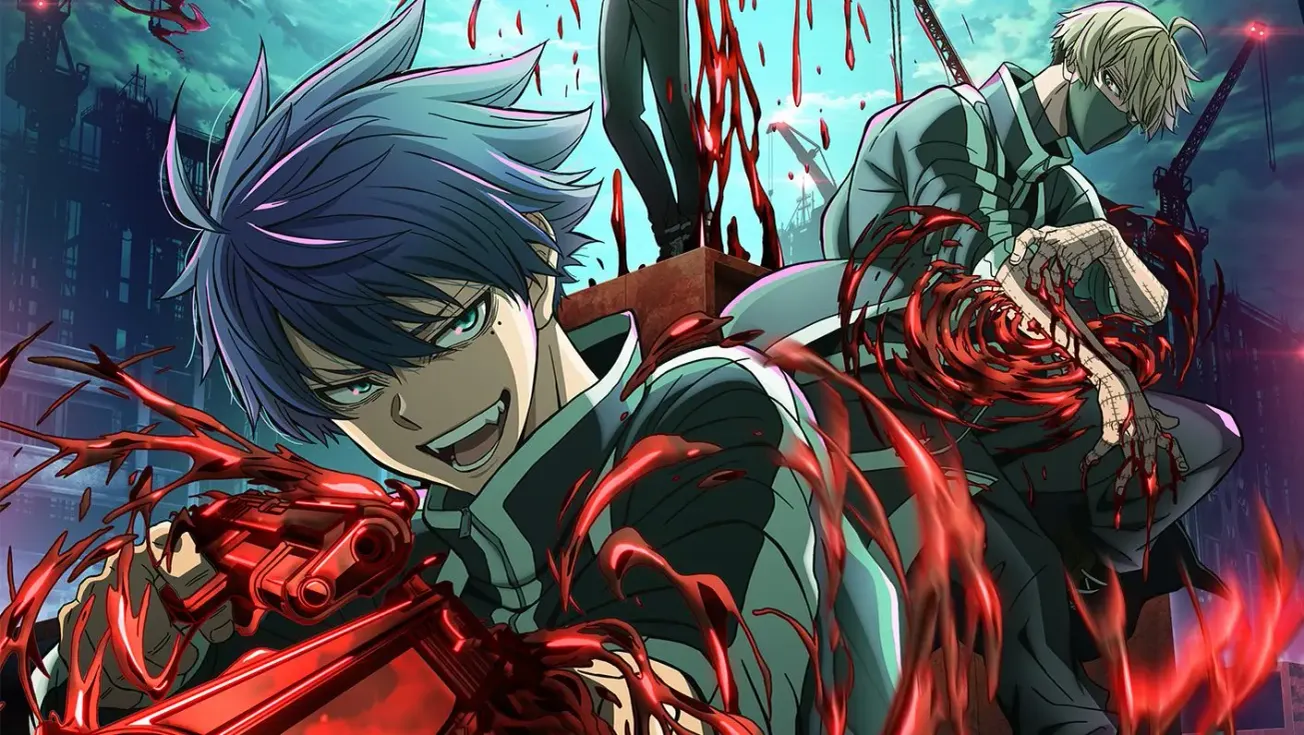
In Tougen Anki, an age-old war rages between two factions: the Oni, demon-blooded beings feared for their destructive potential, and the Momotaro, humans with special abilities who hunt the Oni in the name of protecting humanity.
But here’s the twist — our protagonist, Shiki, is an Oni. And his adoptive father? A high-ranking Momotaro.
From the first episode, Tougen Anki sets the tone: a brutal, high-stakes clash between a berserk Oni and a seasoned Momotaro. It’s bloody, raw, and intense — not just physically, but emotionally too.
When the dust settles, Shiki loses his father and is swiftly pulled into a hidden academy… not for humans, but for Oni. What follows is the beginning of a journey where the lines between hero and villain, justice and vengeance, are anything but clear.
The Magic System Is Visceral — and Thoughtfully Designed
Episode three slows things down — in the best way possible. While the students spar below, Naito Mudano, a sharp-eyed instructor, watches silently from atop a tree, observing without their knowledge.
It’s through his quiet commentary that we get our first real breakdown of Oni blood magic. Every Oni has the ability to shape their blood into weapons or tools. But this isn’t a flashy gimmick — it’s psychological alchemy.
Here’s how it works: the Oni envisions an image, that image is transmitted through the nervous system into the bloodstream, and their blood transforms into what they imagined. Some Oni create weapons that match their personality or preferences — blades, guns, claws. But others — more tragically — manifest blood-born creations shaped by trauma.
Take Homare Byobugaura. She’s quiet, reserved, and considered weak by her peers. But when she sees Shiki get hurt trying to protect her, she emotionally spirals — and her blood instinctively forms a towering, monstrous figure she calls “Sis.” A blood giant. It’s a deeply emotional moment, and a visual cue that her power isn’t drawn from confidence, but from pain.
The other two students — Shiki and Jin Kougasaki — were initially sparring with each other, locked in a heated, testosterone-fueled showdown. But when Homare’s transformation erupts in the middle of their fight, everything shifts. Suddenly, they’re both forced to face something neither of them saw coming: an unstable but overwhelming expression of raw emotion, grief, and fear in the shape of a blood-born giant.
This is what makes Tougen Anki’s magic system stand out: it's not just cool — it’s character-driven. Every manifestation tells a story. Every drop of blood reveals something unspoken.
Multi-Layered Power Scale
To make Shiki stand out, the show later reveals him to be a vessel for "Enki"—a specialized, fire-based power tied to the ancient Oni lineage.
It's one of several rare abilities that only manifest once in a generation, usually when the Oni are backed into a corner. Think of it like a Super Saiyan transformation, but made of fire—and Shiki is woefully unprepared to control it.
On the opposite end of this power spectrum is the "Berserk" form. This is where an Oni literally loses control, allowing their blood to hijack their body for a rampage of unbridled destruction. Narratively, the Berserk form is the entire inciting incident for the war; it’s the exact reason the Momotaro started hunting the Oni in the first place.
Slick Animation, A TikTok-Ready Outro, and Smart Distribution
Tougen Anki doesn’t just hit hard — it looks great doing it. The animation is sharp and fluid, especially in the fight scenes where blood is flying, and emotions are high. You can tell real care went into the visual style, and it pays off whether characters are throwing punches or just trading insults.
But what really caught me off guard was the outro.
At first, it seems like a fun little post-episode dance — the students vibing and filming themselves with their phones. But then I opened TikTok and there it was: edits of the outro, already making rounds online. And they look good.
This isn't an accident. This is smart marketing. In a saturated anime market, grabbing social media attention is half the game. If your outro sparks a trend, you’ve got fans doing your promotion for you.
And that’s not all.
Like Delicious in Dungeon, Tougen Anki is also doing weekly dubs. When a new episode drops on Crunchyroll or Netflix, the English dub is already waiting. That’s a huge win for accessibility — and it’s going to bring in way more casual viewers who don’t want to wait or read subtitles.
This show isn’t just setting up a good story — it’s setting itself up to thrive.
Final Thoughts
First season in, and Tougen Anki has already earned a spot on my watchlist. It’s stylish, emotionally layered, and thoughtful in its presentation — both in-universe and in the real world.
If you’re into Shonen shows that blend brutal action with genuine emotional depth — plus a power system that reveals something about the people using it — give this one a try.
I’ll definitely be following up with more thoughts for individual episodes, both here on the blog and over on the YouTube channel.
Read more about anime in the Anime Index.